High School Science - HS-PS1-3 - Relating Measurable Properties to Intermolecular or Interparticle Electrical Forces
6 Questions
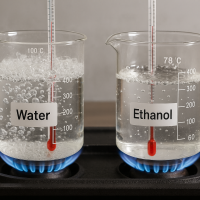
Students heat samples of water and ethanol to determine their boiling points. Water boils at 100 °C, while ethanol boils at 78 °C.
Students record the melting points of sodium chloride and iodine.
In a chemistry lab, students measure the surface tension of two liquids—water and methanol—at the same temperature.
In a chemistry investigation, students compare the vapor pressure of two liquids at 25 °C: acetone and glycerol.
In a chemistry lab, students investigate how intermolecular forces affect physical properties of different liquids.
Students measure the viscosities of two liquids: water and glycerol.
We help forward-thinking Californian districts achieve significant CAASPP score improvements in Science, Language Arts, and Math. Our NGSS-aligned questions ask students to analyze, model, and reason through real-world science challenges.
Learn more