F.IF.C.7c - Graphs of Polynomial Functions
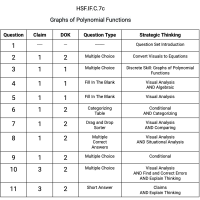
11 Questions
F.IF.C.7c - Graphs of Polynomial Functions
The graph of a polynomial function is shown. Which equation could represent this graph?
Which statement about the graph of p(x) is true?
What value of a makes g(x) match the graph with the smallest possible degree?
The graph of h(x) is shown below.
For each statement, select whether it is Always True, Sometimes True, or Never True based on the description of the polynomial g(x).
Order the functions from lowest degree to highest degree.
The graph of a polynomial function f(x) is shown.
Select the polynomial function that meets all of the criteria listed below.
Eli graphed the polynomial function p(x) and made a mistake. Take a look at the graph and identify Eli's error.
Kelly claims: If a polynomial has three real zeros, then its graph must cross the x-axis three times.
We help districts in California boost CAASPP Math Scores by Δ +20% by helping teachers determine if students are struggling with the content, the technology involved with the type of question, or the type of strategic thinking required. Based on the 8 Standards for Mathematical Practice, our platform and professional development empowers teachers to recognize all 16 types of strategic thinking across any math question, curriculum, or assessment.
Learn more